





What councils have learned about using AI in local government
Leaders from Hackney, North Yorkshire, and MHCLG shared four lessons on AI in local government: start with the problem, involve staff early, plan for residents who can’t use digital tools, and agree who sets the rules.
What councils have learned about using AI in local government
“There is risk in trying. There’s way more risk in not.”
That’s how Cath Ritchie, Head of AI Strategy and Innovation at North Yorkshire Council, sums up the case for councils adopting AI.
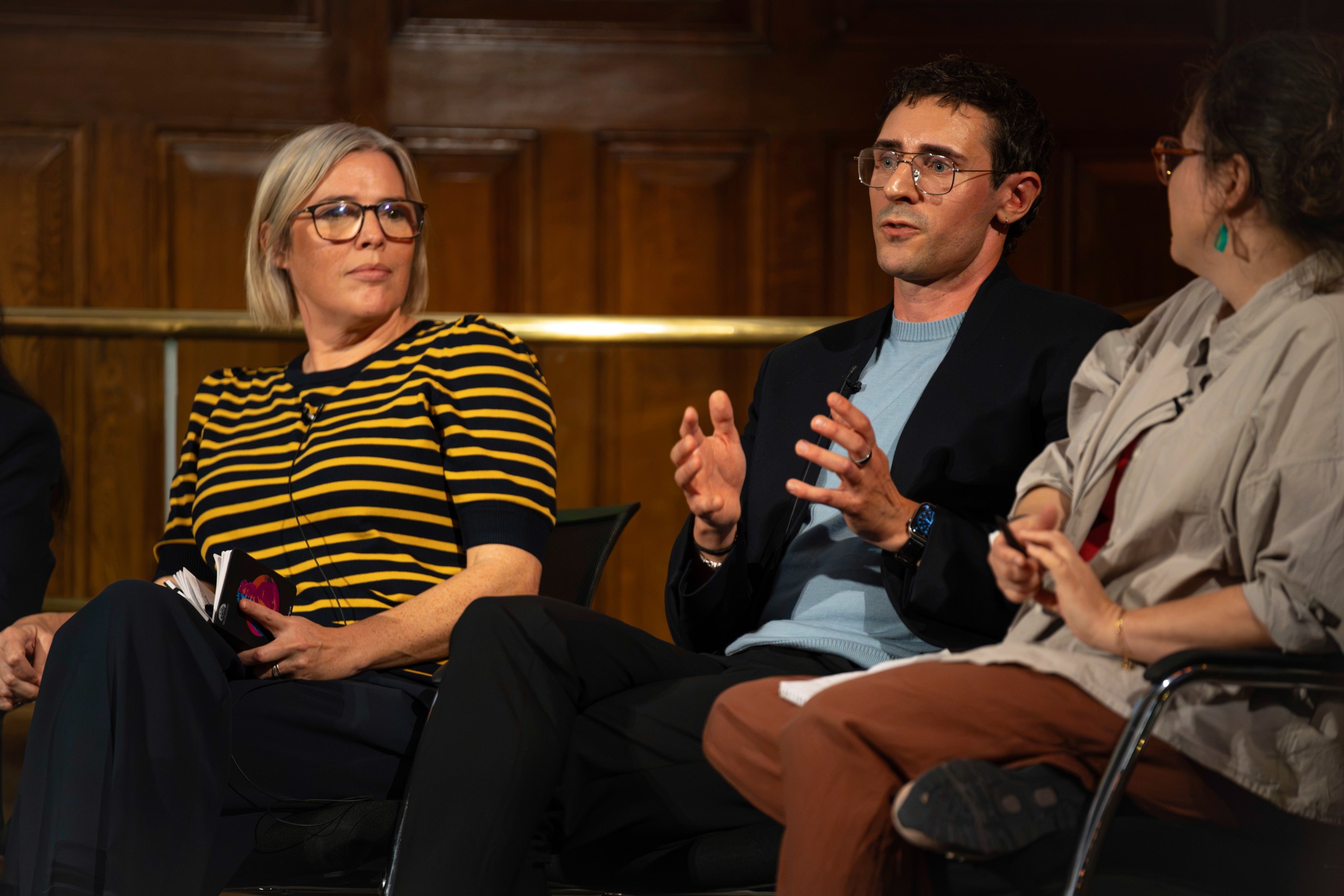
Four lessons came from Hackney, North Yorkshire, and the Ministry of Housing, Communities and Local Government (MHCLG) at the Think AI for Government conference in London recently: Start with the problem, not the tool; involve staff early; foster inclusion from the start; and be clear about who sets the rules.
1. Start with the problem, not the tool
Ask what AI should do, not what it can do
Before you look at any tool, write the problem down in one sentence and name who feels it. Sabhia Malik, Acting Assistant Director of ICT and Workplace Services at the London Borough of Hackney, says councils carry extra responsibility with AI because of the people they serve. “None of us can argue about the power of AI, what it can do,” she said.
For Hackney’s social workers, the problem was the amount of time needed to complete paperwork. Social workers are getting that time back now, “because that administrative burden is less now,” Sabhia said.
143 practitioners at Hackney across 49 teams use Beam Notes adult and children’s social care to record meetings, and turn them into draft case notes or assessments. They review and edit drafts before submitting, to ensure that every case note is accurate and reliable. As a result, they’ve cut documentation time by 60%.
Practitioners also noticed the difference in their visits. Before they had access, 47% said they could give the resident, child, or family their full, undivided attention. Six months in, 93% said they could.
You can build the same evidence. Ask practitioners how long the task takes, so you have a baseline to compare against later.
Fix the process before you add the tool
Map the process step by step with the people who do the work, and remove the steps nobody needs. Sabhia sees that as the biggest job. She names older, complex processes, including those between teams and councils, as the biggest obstacle.
“We need to spend a lot of time streamlining and rationalising some of our more complex processes,” she said. Councils should be clear on the outcome they want before they choose a tool.
Seb Barker, co-founder of Beam, sees councils moving through two phases with AI. In the first phase, councils copy their existing processes into new tools. In the second, councils ask a harder question. “Was it the right process anyway?” Ask it of your own processes before you build on them.
Councils with similar problems have usually solved them in quite different ways, so there is plenty to learn from each other. Once councils redesign their processes, Seb expects more shared learning and common blueprints.
Remember the problems that have lasted
List the problems in your council that have lasted for years, and test AI against those first.
Seb’s view comes from his time working in homelessness outreach, meeting rough sleepers at night and trying to house them the next day. He and a few colleagues once visited an exhibition on homelessness at the Museum of London.
“The first thing you saw as you walked in was a big blown-up map from the 1880s that was the first ever street count for rough sleepers in London,” he recalled. “We knew that there were still people rough sleeping in the same spots.”
His point about AI is that when people talk about it, “there can be an overexcitement of what the technology can do,” and less attention on “the very real long-standing problems that exist in local government.” In outreach he saw people “spending more and more time trying to deal with exploding caseloads” and on reporting.
He founded Beam about a decade ago to address this problem.
2. Involve staff early
Start with how staff feel
Write your AI policy first and share it, so staff know the rules, then talk to them before any tool arrives. That’s the order at North Yorkshire, where Cath’s team writes the policy and then talks to staff. Cath, who comes from a social care background, finds those conversations the most rewarding part. “The reassurance bit is to me the much more exciting bit,” she said.
Ask staff what they want to hand off
Hold a discovery session before any tool arrives, and start your pilot with the tasks staff name. North Yorkshire runs discovery days for this. They open with worries and joy, then Cath Ritchie asks staff which parts of their job they like least, and the team focuses AI there.
Jason Bennett MBE, Head of Adult Services at Vale of Glamorgan Council, took a similar approach with his Beam Notes pilot. He included hesitant colleagues as well as willing ones, so he could learn what worried people.
Invite your sceptics too, so you hear concerns early.
Use the expertise councils already have
Using the workforce planning processes you already have to account for AI. Cath makes the same point in A playbook for agentic AI in local government, which she led and North Yorkshire published with the Local Government Association in October 2026. She and her co-authors ask how AI changes jobs and services.
Councils already know how to manage job descriptions and probation periods, and Cath wants them to apply the same thinking to AI. Leaders and managers need new skills too, because “when they’re reimagining their workforce, AI is part of it.”
Include training for managers in your plan.
Test, trial, then scale
Run a small trial, check that it adds value, and scale only what works.
North Yorkshire’s innovation team treats AI as one part of a wider job. They talk about people and processes more than they talk about AI. “We bring stuff in, we see if it works, if it adds value, we scale it,” Cath said. “If things keep being a good idea, we scale it even more.”
3. Build inclusion in from the start
Design for the people who’d be left out
Find out which of your residents can’t use a digital tool, whether because of access, skills, language or connectivity. Do this before you choose a tool or solution, and plan another way in for each group. If your area has patchy internet, test any tool offline or on a weak connection.
Hackney’s own research found that some residents are shut out of digital services, and that some may be shut out of AI-driven ones too. Sabhia said any solution “will have to incorporate the accessibility side of it, the digital inclusion side of it.”
Prevention is key
Look at where residents in your area reach you in a crisis. Those points show where earlier contact could make the biggest difference. Seb sees early signs that AI could help there. Local government has “always talked about prevention but never had the funding to do it,” he said.
A resident who hasn’t yet reached the point of asking for help could talk to a frontline voice agent that “can immediately speak your language, can offer you help and support.”
Ealing Council has launched exactly this. Its Occupational Therapy and Sensory service has piloted Beam Talk, an AI voice agent, since July 2026. The assistant picks up what residents say and signposts those at high risk back to their GP so they get help sooner.
In one ten-minute call in Hindi, the niece of a 96-year-old man in sheltered accommodation described several falls and a need for more equipment. The AI agent spoke to the caller in their own language, and flagged the call as urgent, routing it directly to the council’s team.
4. Be clear about who sets the rules
Councils and national government don’t fully agree
Agree inside your council who signs off AI use. Check whether national guidance and shared tools fit your services, and tell MHCLG’s Local AI team where they don’t. Councils and national government don’t yet agree on who should lead, and the panel showed it. Louise Jakobsson, from MHCLG’s Local AI team, described a trade-off.
A common national approach helps councils just starting out, but it can crowd out local ideas or produce tools that don’t fit. Louise’s team builds shared tools and supports local projects, aiming to lean into common approaches “in a way that doesn’t stifle innovation.” National and local government, she added, often “speak in slightly different languages.”
Cath disagreed that the two sides talk past each other. “We do speak the same language,” she said. She asked national government to go to where councils already are, meaning the Local Government Association and existing networks, and to avoid a “top-down, done-to” model.
Louise and Sabhia largely agreed with Cath. Louise asked how national government can “build on what already exists at a local level and make sure that we spread that.” Sabhia said councils may “all be working in silos” and need a forum to share what they learn.
All three wanted more sharing between councils. You can share what you learn through the networks you already use, including what didn’t work.
What to do next
Here are four steps you can take in your own council.
- Check the process. Decide whether it’s worth keeping before you add a tool.
- Ask staff first. Run a session where people say what worries them and which tasks they’d hand off. Vale of Glamorgan included hesitant colleagues in its pilot for the same reason.
- Plan for people who’d be left out. Find out who can’t use a digital tool, and offer another way in.
- Share what you learn. Use the networks you already have, and agree what stays local and what’s shared.
Every council starts from a different place. If you’d like to talk through where to begin, get in touch and we’ll share what we’ve seen work.